Original title
Mythos
Released
-
Origin country
US
Genre
Documentary
Status
Ended
Number of seasons
3
Number of episodes
15
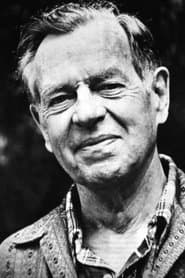
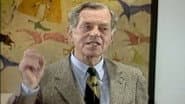
Mythos is a three-part documentary that consists of a series of lectures given by Joseph Campbell. Campbell conceived of the original lectures, filmed over the last six years of his life, as a summation of what he had learned about the human mythic impulse, in terms of psychology, ethnology and comparative mythology—what he called "the one great story of mankind."

Joseph Campbell: Mythos I – The Shaping of Our Mythic Tradition is an all-encompassing primer on the idea of myth and its emergence in ancient societies. In this fascinating lecture series, Campbell connects the core ideas necessary for understanding myth to the psychological insights of Carl Jung, exploring broad topics such as the formation of religion, gender roles, and societal evolution. Presented across five compelling segments, this volume lays the foundation for understanding myth's enduring role in our lives and introduces Western mythos through history, psychology, and biology, all through Campbell’s engaging and accessible style.
Campbell begins "Psyche and Symbol" by explaining how a functioning mythology serves both the individual and the society. Then he explains that psychology provides insights into how we live our lives. The more we know about our common psychological roots, the more we feel connected to those roots. He continues to talk about the self, the relationship between man and woman, as well as how the universal themes are accessible to all through art.
"The Spirit Land" initiates us in to the world of the American Indian. He begins by looking at modern society and the cycle of life that we all travel through. Campbell asks us difficult questions such as "Are you the vehicle of consciousness or are you the consciousness?" These themes are especially evident through the letter of Chief Seattle to the President. The psyche of the American Indian is completely different to that of the European Americans. It is from here that one can understand better the concept of what myth means to a culture.
"On Being Human" moves from the psychological origins of myths to the origins of human beings in prehistoric times. By tracing the development of mythic symbols from our earliest ancestors forward, we begin to see the themes that link all of us together into what Campbell calls the one great story of human kind.
"From Goddess to God" takes on the first major transformation for humankind. It begins with the emergence of agriculture and culminates with the world's first great empire: Egypt. While to some this may be just history, it is this history that has happened to the human race. By looking at these ancient cultures we can get a glimpse into our own lives.
"The Mystical Life" describes that the seed of the soul is where the inner and the outer worlds meet. While the outer world changes with time, the inner world, or soul, is constant to the human race. It is through myth that provides the link between these two worlds.

In Mythos II – The Shaping of the Eastern Tradition, Joseph Campbell explores the spiritual realms of the East, focusing on Hinduism and Buddhism. Through a series of engaging lectures, Campbell examines how myths evolve to reflect changing beliefs about nature, God, and life, delving into the core myths of the great Asian religions, the Buddha and enlightenment, the connections between East and West, Yoga and transcendence, and Kundalini yoga with the seven chakras. Presented in the final years of Campbell's life, this collection illuminates how Eastern traditions shape consciousness and spiritual understanding.
Campbell introduces us to the core ideas at the heart of the Eastern traditions and explores what Aldous Huxley called the Perennial Philosophy and how it is realize in Hinduism and Buddhism. He traces the development of the idea of spiritual emancipation from the early Indus Valley civilizations through the Vedic literature to the Upanishads. Campbell identifies the point of departure between the Eastern and Western traditions. Finally, Campbell explains the concept of Nirvana and sets the stage for the arrival of the Buddha.
Campbell uses stories of the Buddha's life and enlightenment to reflect the essence of the Buddhist religion. He explains the difference between the two principal types of Buddhism - Theravada (Hinayana) and Mahayana. Campbell also probes the differences between Eastern and Western religion by focusing on Buddhism as a religion of "identification with" the divine rather than on of "relationship to" it. He also compares Buddhism with Taoism and Confucianism and explores an ancient collision of East and West.
Our Eternal Selves introduces us to the systems of yoga that grew out of the mainstream of India spiritually. Campbell demonstrates how the Eastern way of perceiving consciousness is radically different from how it is perceived in the West. He demonstrates how yoga acts as a mediation to bring the practitioner to ever-higher stages of consciousness, to unite one's personal consciousness with the eternal, undifferentiated consciousness of the divine.
Perhaps the most sophisticated form of yoga, Kundalini Yoga, concentrates on the seven chakras or symbolic centers of our psychic energy. Campbell explains the full chakra system of Kundalini Yoga and makes comparison with modern Western psychology and Christian concepts. Explore how this system teaches rituals and mediation practices so unit the spiritual power in the human being with the spiritual force of the universe.
Campbell demonstrates how Tibetan Buddhists turn the ritual experience of death into a spiritual exercise. Trace with him the stages of the Tibetan Book of the Dead in which the Llama prepares a dying man and his family for the final moments of life. This passage, in fact, is a journey downward through the chakras, the centers of energy of Kundalini Yoga. Campbell reveals how the Eastern tradition reaches its most sophisticated expression in the art, philosophy and mysticism in the Buddhism of Tibet.
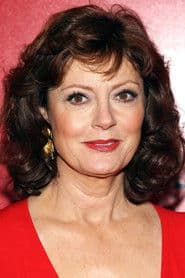
Mythos III: The Shaping of the Western Tradition presents Joseph Campbell's recorded talks from the final years of his life, in which he reflects on the great themes of Western myth, love, and the path of the heart. Hosted by Susan Sarandon, this features key lectures where Campbell shares insights on how myth shapes our understanding of life, explores the journey "beyond space and time," and delves into the interplay between pairs of opposites. Part of his legendary final speaking tour, Mythos III offers a culminating perspective on Campbell’s lifelong study of the Western imagination and spiritual tradition.
Arthurian romances from 1150-1250 AD have two love forms: lust-zeal of the organs and agape- spiritual love. Christian of Troy writer of 'Tristan', 'Erec', 'Cliges', 'Lancelot', 'The Yuain' & 'Tristan and Iseult'.
The Arthurian quest of the holy grail, or a meeting with God, grail being the passion of Christ. Wolfram von Escher Bach's "Parzival" (1210). "The Quest of the Holy Grail" presents 1st marriage for love. Wow-an earth shattering medieval concept. Plus rule for the people, a new Western cultural view.
Discusses 18th- and 19th-century German Romantic Philosophies. The philosophy of Schopenhauer: Will in Nature.
Revolutionary impacts on art and thought as it correlates with myth themes, life or art. Specifically looking at Tomas Mann's "The Magic Mountain" (1924), Lord Death and Lady Lust. Hermetic pedagogy, as Campbell himself states.
A close look at aspects of Mann's "Joseph and His Brothers" (4 novel series), its modern retelling of a Biblical tale, use of myth and other religious sources, and psychological insights and relevance to myth and art. "The Myth is the foundation of life," T. Mann.
This website uses TMDB and the TMDB APIs but is not endorsed, certified, or otherwise approved by TMDB.