Original title
Journey to the Microcosmos
Released
6/24/2019
Origin country
US
Genre
Documentary
Status
Ended
Number of seasons
7
Number of episodes
236
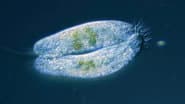
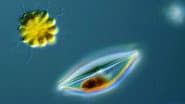
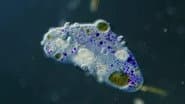
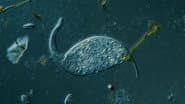
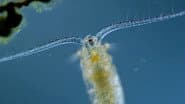
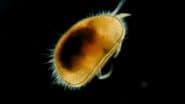
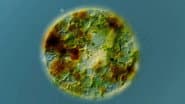
Take a dive into the tiny, unseen world that surrounds us! With music by Andrew Huang, footage from James Weiss, and narration by Hank Green, we want to take you on a fascinating, reflective journey through the microcosmos.

An April Fools Episode
As strange as the creatures of the microcosmos are, their lives still revolve around the same fundamentals that ours do. There’s food, reproduction, and death. Yes, even microbes, hardy as they can be, experience death. In some ways, they invented it.
This is a world where microbes are both residents and food, which means that occasionally, we’ll have to spend our time together watching organisms, whose bodies are fractions upon fractions upon fractions of a millimeter in size, turn into vicious predators.
If we had to nominate an ambassador to represent the microcosmos, we would have to go with the tardigrade. They’re weird, adorable, and hardy, – a combination of traits that has made them many people’s first entry point into the microcosmos.
Butts. A Whole Compilation Of Them.
We have a complicated relationship with worms. On the one hand, they’re gross. They end up in body parts and cause disease. On the other hand, they’re everywhere. You cannot escape worms, especially in the microcosmos.
There are a lot of creepy creatures in the world, and even the microcosmos is no place to escape them. And perhaps one of the most unsettling creatures to us here on Journey to the Microcosmos is the mite.
A compilation of a compilation of all the compilations from Journey to the Microcosmos.
An Hour of Our Uncut Microscopic Footage
Join us on the first episode of Journey to the Microcosmos as we take a dive into the tiny, unseen world that surrounds us! With music by Andrew Huang, footage from James Weiss, and narration by Hank Green, we hope to take you on a fascinating, reflective journey!
On this week's journey, we explore the ways things eat in the microcosmos, from Stentors filter feeding to Dileptus hunting down and absorbing its prey.
It's time to meet a single-celled organism that is bigger than a tardigrade! We'll learn how Stentors reproduce, why they look like trumpets, and why some of them are just SO BLUE!
How do stentors make more stentors? Does Paramecium reproduce sexually or asexually? Find out on this week's journey as we explore the ways the microcosmos reproduce!
1.8 billion years ago, a cell ate another cell, but it didn't digest it, and without that happening, we would not exist. This week we explore the origins of eukaryotic cells and ask the question, "Are our cells more than ourselves?"
We know these cute little water bears can survive the vacuum of space but are they actually immortal? We'll explore that and other misconceptions about tardigrades in this week's journey!
If you were a protozoan, how would you zoom zoom zoom all around the microcosmos? From false feet to microtubules, find out how these single-celled eukaryotes make their way through the universe.
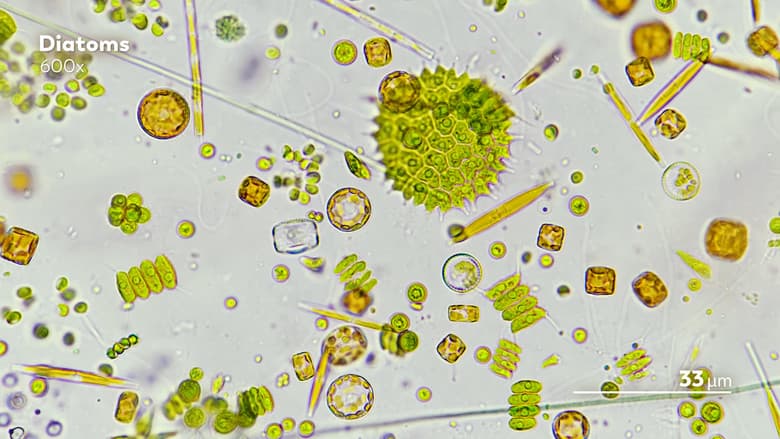
We owe so much to diatoms! They help us make beer, paint, and kitty litter, and they're responsible for some of the air you're breathing right now!
Let's journey deep into the cells themselves to take a look at some of the structures that keep cells alive and others that do... something... that we'll figure out someday... probably.
In the microcosmos, it's dangerous to go alone. This week we go on a journey into colonies to find out why sticking together is such a great strategy!
Death is inevitable and mysterious, even in the microcosmos. Stentors, heliozoans, and yes, even tardigrades, experience death in many different ways.
Euglenoids have had a very, very long time to evolve, and that has led to the things they have evolved into being extremely diverse—so diverse that, combined with the varied shape-shifting abilities of its member species, euglenoids have proven challenging to both identify and classify.
The hydra of mythology may not be as far off from reality as you think! Let's take a journey to the mall to meet our tentacled, regenerating friends!
This week, we're taking a bit of a break, but we thought you might also like one. So, today, let's all just sit and look at our lovely little friends while we take a breath and enjoy Andrew Huang's amazing music.
Slimy, a little smelly, maybe even a little gross, but to many organisms, the oxic-anoxic transition is a shifting chemical boundary that has created a challenge for life...a challenge it conquered.
We also don't really know what rotifers are... but we'll try to tell you as much as we know!
Life is chemistry. From diatom to Diana, life is not a magical imbued trait, is a process of the physics of our universe. The precise and convoluted chemistry of life requires specific physical and chemical situations. And this planet has a dizzying variety of such circumstances that, over millions or even billions of years, living chemical systems have evolved to thrive in.
Yes, they might eat your brain, but there's a lot more to amoebas than that!
We see the colors of the microcosmos every single week, but let's stop and ask why our some microbes are bright green, while others are a golden brown.
This week, the microcosmos meet the cosmos as we explore even more fascinating things about our friend, the tardigrade. We'll discuss their weird weird mouths, how we take care of our tardigrades, and what's going to happen to those tardigrades that crashed into the moon.
Where is the line between good and bad microorganisms and why do we seem to know so much more about the bad ones?
These world travelers might be, well, almost everywhere, but there is a still a lot we don't know about the famous paramecium.
Microbes are used for everything from baking to brewing, but wastewater treatment is where they do some of their most important work.
This week, we're diving back into the world of Stentors to find out what humans and Stentors have in common!
These little hairy-bellied friends lead a very interesting life, albeit a short one.
This week's journey comes to you unedited and in real-time as we explore a mysterious infection.
In a world without microbes, this channel wouldn't exist. But there are other, more important things that would stop existing as well, and today we're going to explore just what could survive a world without our little micro friends, and for how long.
In our Season 2 debut, we're diving back into the world of our favorite little water bear friends!
Original Title: Our Tardigrade Had Babies!
When there are over one trillion species, it can be hard to determine what you're looking at on your microscope. Thankfully we've got some helpful tips for you!
Original Title: 12 Minutes in the Life of Vorticella
Making decisions can be pretty hard, but imagining trying to do it without a brain!
Even in the microcosmos, it's important to stay inside if you want to avoid a virus.
A lot of the microbes we show you are completely naked, but the test amoeba is a bit more modest.
There’s something you probably heard a lot in biology class. And no, it's not “mitochondria is the powerhouse of the cell”...
The world of microscopy is not without its own controversial figures, today we’re discussing Lynn Margulis and her contributions to the world of science as well as some of her more harmful beliefs.
Yeast: the most coveted microbe during this pandemic. This week we’re taking a close look at the little guys that make up our bread and beer and the vital role they’ve had for thousands of years.
There’s a story behind every microbe’s name, and that of the Phacus smulkowskianus is surprisingly sweet.
Sometimes, pictures and videos aren’t enough. Sometimes the best way to share what you’ve seen under the microscope is, well, to share the actual thing you’re looking at.
The goal of phylogenetic trees is to track the organisms we know of through their place in evolution.
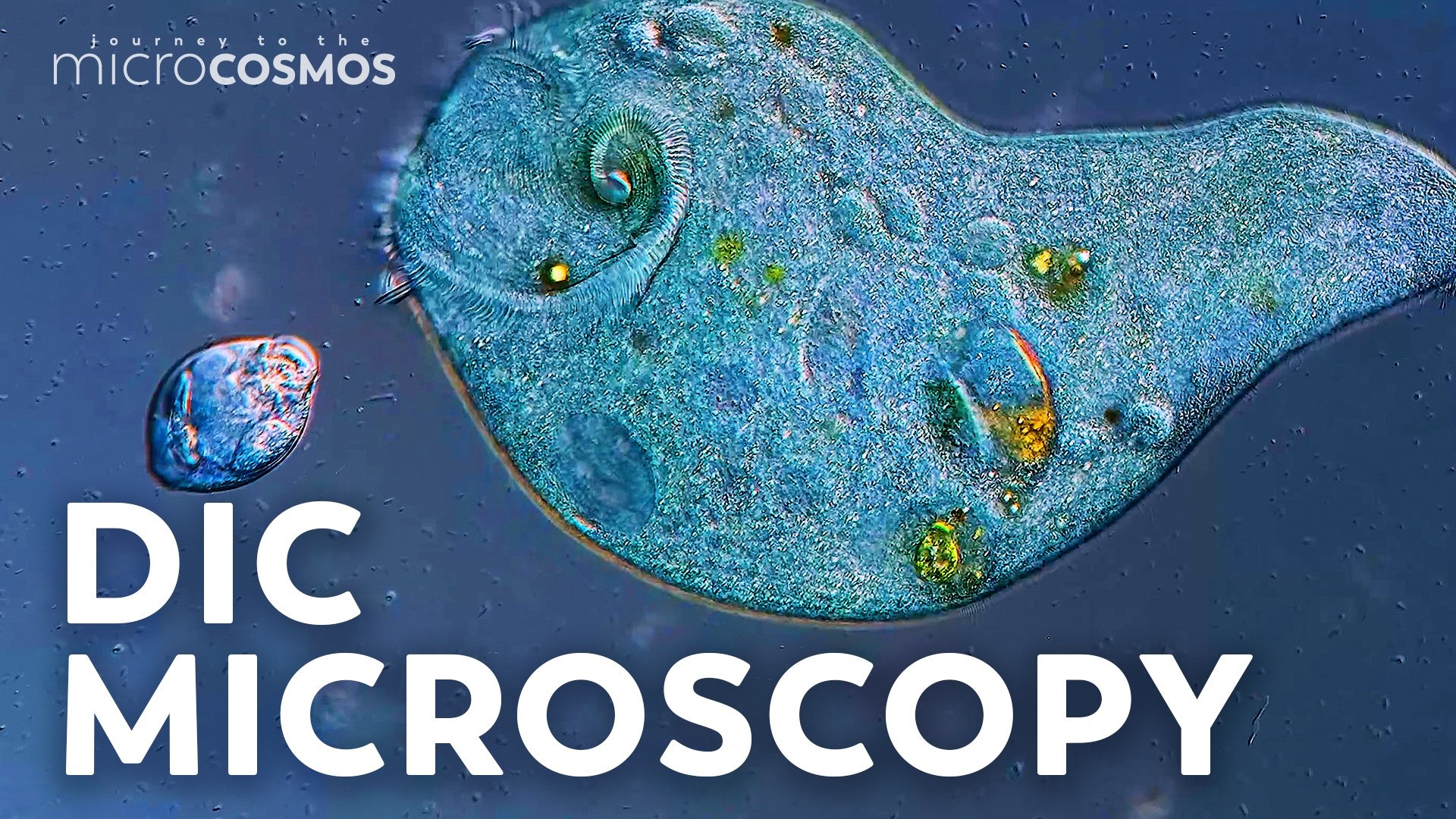
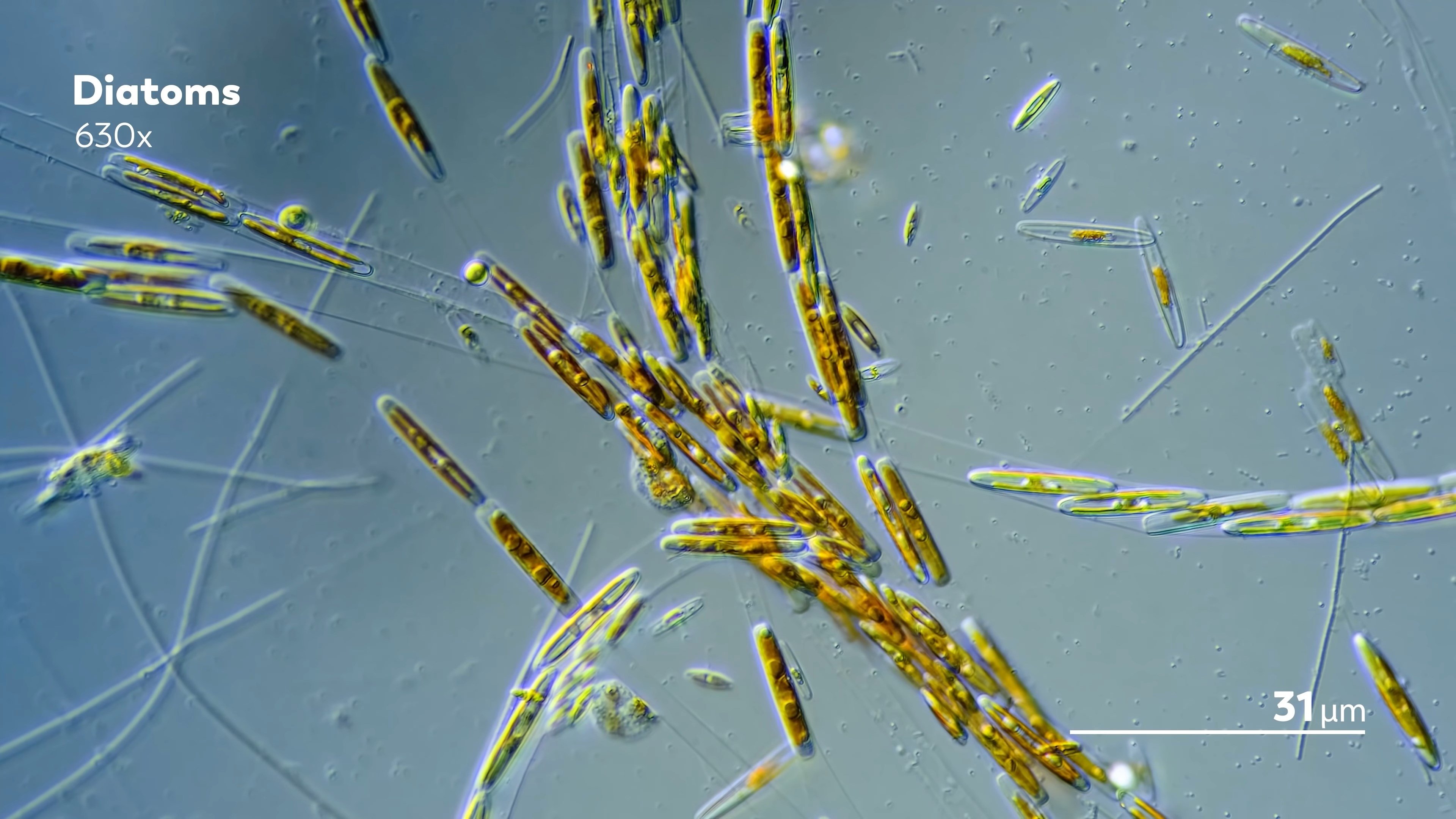
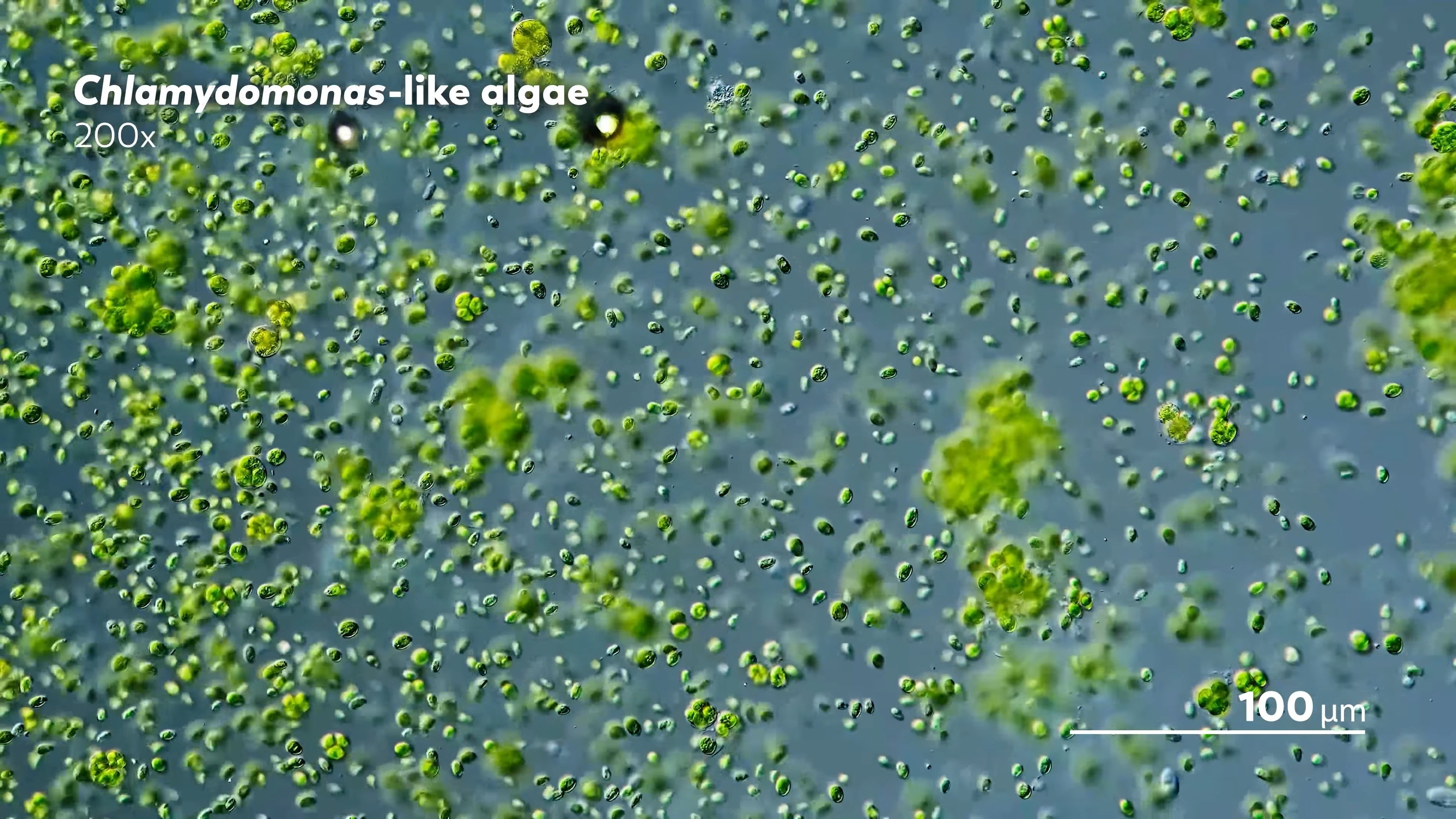
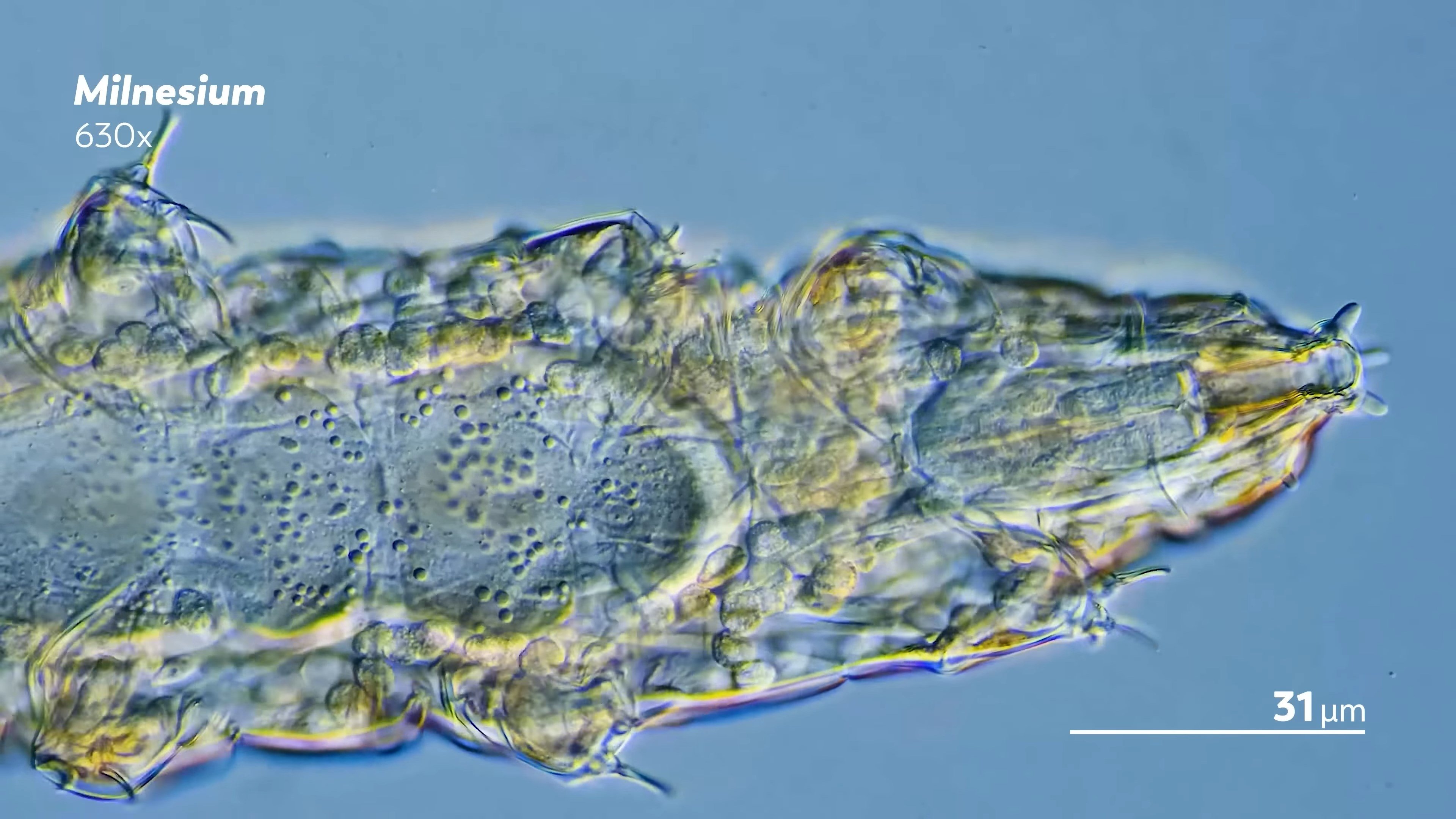
Differential interference contrast is not a microscope, but rather a method that enhances contrast, and thanks to our new microscope we are able to share some amazing DIC images with you!
Everybody poops, but how does one poop when one does not have a butthole?
We recently discovered some Holospora infecting one of our Paramecium samples. How does that happen? How does the Holospora get in there? And how are they so successful at infecting?
Arthrobotrys is a genus of fungi that not only kills nematodes, but it also sets traps in order to catch them!
On the surface, Ophyroglena seems like it should be pretty easy to identify, but it all depends on which stage of life it's currently in.
Are you immortal if you never age? Defying death is not as clear-cut as it might initially seem. What we define as immortality depends a bit on what you think it means to die.
Today we're exploring the intriguing Ouramoeba vorax. Or wait... is it Amoebophilus simplex? Let's figure that out together by diving into some history!
It's time to explore a big question while we watch a ciliate go through its last moments.
Our giant Stentor friends are back with more strange stories about these mysterious giants!
Alfred Kahl only spent a decade in the world of the microcosmos, but in that time he discovered more ciliates than anyone else ever has!
It may not be the super rare tentacled ciliate we were looking for, but it's still a really cool super rare tentacled ciliate!
We're going fossil hunting for Foraminifera! From beaches, to the ocean floor, to the foundation of the Egyptian pyramids, Forams are everywhere!
Bacterial flagella are very hard to spot in our footage, but we see evidence of them in almost every single one of our videos. The question is, how do they work, and are they different from the other flagella we've discussed?
As the search for alternative energy sources continues, scientists are looking to the microcosmos and wondering: Can we use algae oil to power our cars, our airplanes, and maybe even our spaceships?
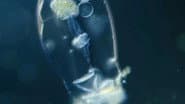
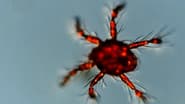
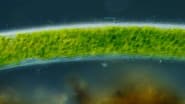
After over three years of searching for it, our Master of Microscopes has found a Spirostomum semivirescens!
The big Roomba of the microcosmos is fascinating to watch as it lives its sink or swim life.
From trumpets and spirals to floral arrangements, single cell organisms take on many strange and unique shapes. But they don't look like that just for fun, their shapes can help them with movement, hunting, and even defending themselves.
Original Title: Tardigrade Sperm and Other Reproducing Swimmers Not all hypotheses need to be good. In fact, many of them are terrible. It’s just that when you’re trying to understand the world, you might find yourself believing that there are tiny humans living inside the heads of sperm, and we're here to tell you, that's not how it works.
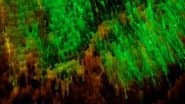
Sometimes we come across microbes that we just can't learn much about, or that don't fit into a larger story. So, this week we're sharing a few of those mysterious microbes with you.
Oil immersion is an interesting and complex microscopy tool.
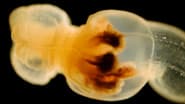

It's time to dive into our collection of spores, molds, and fungus!
“But wait!” you might be saying to yourself. “How can an organism be photosynthetic and so afraid of oxygen? Doesn’t photosynthesis create oxygen?” And yes, you would be correct—most of the time...
There are only a few groups of bacteria that do this kind of gliding, but they’re found across a plethora of environments, including ponds, soil, and, surprise, in our own mouths.
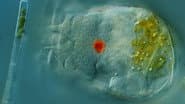
Rotifers don’t really get a lot of love when it comes to microscopic animals. At least as far as the public imagination goes, the rotifer is overshadowed by its fellow metazoan of the microcosmos: the tardigrade. And we might be part of the problem.
Arugulus sure know how to get under a fish's skin, literally. Fish will actually throw themselves out of the water to get an Aruglus off of their side.
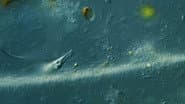
When we look at bacteria under a microscope, they appear to be tumbling around chaotically, but over the centuries we realized that their pathways have a purpose.
Scientists have observed some copepods eating over 300,000 diatoms in a single day!
While our journeys are often enjoyed at a slow pace, when we go just a little bit slower and look a little bit deeper there’s always something new to find.
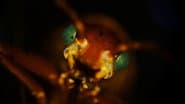
We often focus on the organisms, but what about the even smaller world inside of them?

When it comes to the muses of the animal kingdom, the nematode seems like an unlikely well of inspiration, but over the past century, they’ve become one nonetheless.
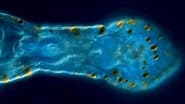
Worms, despite their seemingly simple bodies, are a diverse bunch. Which is why we thought that for today, it might be fun to visit with a less famous worm, and like one of those relatives you don’t know very much about, but every time you see them, there’s a new, strange story to unpack.
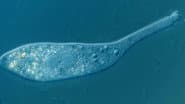
If you know about the species Lacrymaria olor, then you know what you’re getting when you see it under a microscope. It has a distinct shape, a distinct way of life—the combination of its own genetics and its surrounding environment.
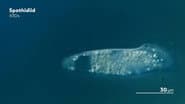
The family Spathidiidae is made up of around 20 genera, which encompass around 250 known species. And there’s a lot of variety in the Spathidiid family to sort through.
Every experiment has to start somewhere. This one began with a container full of dying microbes, and the five cute, pink ciliates called blepharisma that James, our master of microscopes, accidentally turned into a group of cannibals.
We’re starting this episode out with a question that we’re never going to have a good answer for: how many cells do animals have? How could we ever hope to count all those cells in each of those animals? And how could we even begin to assume that the amount of cells in one individual is going to be the same for all the other individuals?
Somewhere around 470 million years ago, something happened that shouldn’t have been particularly striking. An algae found its way onto land. This algae turned the lands of this earth green, altered the chemistry of our atmosphere, and created homes for future life. This algae would give rise to all of the land plants we know of today.
When you’re in the business of hunting for microbes, sometimes you have to send some weird emails. That’s why James, our master of microscopes, sat down one day to send his own strange request to the people at Coralaxy, a coral farm in Germany.
We’ve spent most of our journey through the microcosmos seeking out the organisms that are too small to see with just the human eye. The bacteria, the ciliates, the tardigrades. Part of what makes them so exciting to find is that they are so tiny. Every moment we spend with one of these organisms is a peek into something exceptional in our experience of the world, and it’s the result of how much work James, our master of microscopes, has put into hunting down as many microbes as he can.
James, our master of microscopes, recently received a package from a coral farm in Germany. We’ve explored some of the microscopic creatures and bristle worms that were living and thriving in those packages in previous videos. But today we’re here to focus on the main event: the corals.
We’re going to see a type of motion over and over again because it’s all over the microcosmos, found in and around many different types of organisms. And this kind of random motion may seem almost too trivial to discuss, but this motion that you see is a proof of something fundamental not just to life, but to existence itself. This movement… is proof… of atoms.
For an activity that mostly involves sitting and staring, microscopy is a surprisingly high stakes task. On the other side of the lens are drops full of potential, a multitude of worlds to unravel and examine. But they’re also fragile worlds, easy to fracture and lose with just a tiny slip of the hand. The stakes only get higher when you’re dealing with an organism so rare that it’s only been reported a few times since it was first discovered in 1901.
You’ve heard those worm horror stories, right? Stories of painful stomach cramps or diarrhea or nausea that eventually turns out to be caused by some worms that have taken up residence in someone’s intestines. It’s so terrifying and wild to think of something so much smaller than us causing so much havoc. But, what if worms had to worry about their own guts being taken over by a parasite?
This Loxodes magnus is large, so large that it was able to eat a rotifer, those funny animals we often see getting bullied by their single-celled neighbors. Except, that rotifer is moving. It’s alive, twisting and turning inside of the food vacuole it’s been stuffed into, and starting to fight back.
At first glance, they seem a bit more like plants or a series of flowers with thin, elegant petals. But no, they are indeed an animal. One that has the dubious honor of being defined largely by its anus.
James, our master of microscopes, is not a farmer. He is, to put it simply, fascinated by microbes. And that may lead him to strange places and cause him to grow tanks full of weird things. But he is not a farmer.
The theme of today's episode is pretty simple: things we never thought we’d be showing you, but here we are.
It’s often said that one person’s trash is another person’s treasure. And surely there is no greater proof of that than the home of our master of microscopes, James. All along the windowsills and bookshelves are jars and tanks full of samples gathered from ponds, lakes, and oceans. And even his cabinets and drawers and bathroom hold stockpiles of what he’s found. There is just one problem though... the snails.
From our vantage point, as relatively large organisms, it can be easy to overlook the microcosmos, because it’s simply too small to see. It floats in front of our eyes at all times, and yet we cannot make out details until we turn to other tools.
Tardigrades have been through a lot. They’ve been sent to the moon. They’ve had the moisture sapped out of them. At times, they’ve been in extreme heat. And at other times, they’ve had to contend with extreme cold. Well, today, we’ve got a new one for you. A harrowing journey for these tardigrades that have taken them through, what we assume, must be the worst thing that tardigrades have yet been subjected to. These poor, enduring tardigrades got stuck in postal security.
The ciliates we’re going to talk about today are kind of…frustrating. At this point in our journey, we’ve gotten used to the fact that the microcosmos is an indecipherable mess at times, filled with organisms that look like each other, and who have familial relationships that seem obvious but then turn out to be a figment of our own limited imaginations. And these ciliates are yet another entry in the long-standing saga of ever-changing taxonomies that define our understanding of microbial species. The plot twist is inevitable.
The microcosmos might seem like a safe place from a surprise spider attack, but it would be misleading to pretend that it’s completely free of spider-like sightings. Because even at this small scale, you could find yourself subject to an ambush of the arachnid sort.
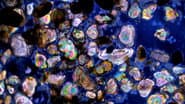
Usually on Journey to the Microcosmos, we spend our time looking at living organisms, things like insects, plants, and microbes that move and breathe and grow and die. But today, for these first few moments, these are the only living organisms we’ll be showing you, a montage of creatures whose bodies all share one very eye-catching trait: crystals.
Depending on your love of horror stories or your belief in the supernatural, it might be easy to convince you that lakes are full of ghosts. That as you plunge deeper into these lakes’ depths, you’ll come across translucent bodies that come alive when nighttime sets in; with its limbs all packed close to the head, wrenching open and closed like scissors that propel our spectral friend in jarring motions.
When James first saw these bacteria, all he knew is that they came from a sample taken from a Portuguese beach. And on the slide, the bacteria were swimming in a stark line. And that gave James an idea. He took out his phone and opened up his compass app. Then he placed the phone on the microscope stage to see what direction the bacteria were swimming in. And he found that the bacteria were all swimming north.
Our oceans and lakes are filled with copepods, a myriad of small crustacean species that might float as plankton or infect other creatures1. And as they’re living in whatever manner best suits them, some copepods—like our friend here—become more than just their own creature. They become a surface, a place for someone else (or something else) to settle down upon.
This is kentrophoros, a ciliate that James—our master of microscopes—had been searching for, receiving samples from all over the world in the hopes of finding it gliding around. When you first look at it, it doesn’t seem particularly special. But there are two things that the kentrophoros is famous for. The first is its lack of a mouth. The second is its coat of bacteria.
As animals, we owe a lot to the single-celled organisms that came before us. These are the organisms that laid the chemical groundwork for how we live, from the DNA and proteins within them to the molecules they released into the environment. There’s something humbling about looking at our hands or feet and imagining the mixture of cells within them, and realizing the lessons that keep those cells bound together physically and biologically are rooted in a very ancient study in cooperation.
Sometimes our journey through the microcosmos feels like an expedition, a voyage filled with deep dives into the masses of organisms basking under the glow of our microscope. So what does it mean when you don’t find anything. When you gather your samples and excitedly prepare them for the microscope, only to find a landscape lacking in the life you expected to find?
Watching this Peranema feels a bit like watching a cat waffling back and forth between whether or not it wants to take a nap. Sometimes the Peranema stretches, its body undulating into an elongated, indescribable geometry as its flagella twitch like whiskers. And then, sometimes, it curls up into a cozy circle, tucking one end into itself the way any feline friend you might know curls up around the perfect beam of sunshine.
Imagine that this is the beginning of the last thing you’ll ever see, an empty landscape with thin lines scratched across it. But those lines suddenly sharpen and gather into a dense mass that spreads from the crown that sits atop a giant, studded with greens and yellows. A giant that is in search of one thing: food.
The Gastrotrich has long been a personal favorite microbe of several members of the Journey to the Microcosmos crew. But while we were able to see a lot with the microscopes we had at the time, James—our master of microscopes—has made some significant upgrades since then and this means that we are now able to see gastrotrichs in a whole new light.
Science is built on questions. So let’s start today with one: what do you think happens when you set off an electrical spark in the microcosmos?
If you’ve been with us on our journey for a while, you’ve probably heard us say the phrase “we don’t know” a lot. The microcosmos doesn’t guarantee answers, and we’ve often found ourselves looking at some unusual behavior or beautiful form that represents some fascinating, unresolved mystery.
You may not want to think about it this way, but your mouth is really just one giant, wet cave for microbes. From the perspective of bacteria, your mouth is not a tool. It is a home. It is a place that provides shelter and food, but it is also a place that can pose many threats. And the interplay between our mouths and the microbes that take up residence within them ends up, inevitably, affecting our own health.
This might not look like much. But every day, tiny little things like this are raining down on our planet. Each one is small, about a millimeter across. But over the course of a year, each individual piece that makes its way to Earth’s surface adds up to around 30,000 tons.
The microcosmos is not always a graceful space. Sometimes an organism just needs to get around the way it gets around, even if that means looking like a swimming elephant head with a truncated snout at one end and a rat tail at the other.
As you’re wandering through the aisles of the grocery store, you might find your attention caught on any number of things. Frozen pizza. Cupcakes. Wine. And as delicious as all of those are, we doubt that any of them undergoes as spectacular of a transformation as a packet of instant yeast does when you shoot lasers at it.
Microbes are not just blobs. They are very well-evolved biological machinery, the product of eons of evolution that have exposed their ancestors and them to different homes and food and threats.
Blood is a useful substance, not just for our life, but for our way of thinking. It signifies life, but also accompanies death. It unites those who share it, but in doing so it divides others. It runs hot, it runs cold. Whatever it is we need to describe, blood is there for us to project onto, flowing through us.
Our world today, the one that we have constructed, feels as if it runs on plastic. It is a building block in our bags, our bottles, clothing, toys, the list could go on and on. Plastic has become so prevalent that it’s almost impossible to escape.
A useful principle in the story of life is that you should never underestimate algae or cyanobacteria. They’ll just always manage to surprise you, and more importantly, to remind you that everything you have comes down, eventually, to them.
Do microbes ever feel fear? Or concern? Or trepidation? While they can’t exactly tell us, they probably don’t– at least not in ways that we could understand. But we can tell that they definitely experience stress.
You might wonder why we would care if a demodex has a butthole or not. Well, we care because they live on our face.
These particular little green organisms show up in the background of other organism’s lives, providing pops of color among other debris. What you are looking at is not a single organism, but rather a gathering of them. Those green bits are consortia of bacteria.
Every time we see diatoms, we have to give it to them: they’re just simply stunning. They’re single-celled and major producers of the oxygen we breathe, but the real reason we love seeing them is because of their frustules.
One of the most common questions we get asked here on Journey to the Microcosmos comes from all of you who are thinking of starting your own microscopic journeys and want a little nudge in the right direction. The question is: what microscope should I use?
If we were to write a fable to get this moral across, it would have to star the freshwater cnidarian called the hydra. Because in the hydra, the question of butts connects to the ambiguities of immortality, which in turn relates to the befuddling matter of sexual reproduction.
Oomycetes are one of the more unusual-looking microbes we’ve seen in the microcosmos. It looks more like a coral reef painted by an artist inspired by Gustav Klimt and a pile of trash. And if you saw that painting hanging in the museum, you might pass it by without thinking much of its subject.
The microcosmos is home to many unusual partnerships. Life is, after all, just relationships, each of which build upon one another like strokes of paint in an epic tableau of ecology, epidemics, and yogurt?
There’s a few things that give Beggiatoa away. The first is the simple serpentine shape of their bodies, and the second are those little dots inside of them. They look like bubbles, but they’re actually sulfur granules.
If we were to write a fable to get this moral across, it would have to star the freshwater cnidarian called the hydra. Because in the hydra, the question of butts connects to the ambiguities of immortality, which in turn relates to the befuddling matter of sexual reproduction.
Oomycetes are one of the more unusual-looking microbes we’ve seen in the microcosmos. It looks more like a coral reef painted by an artist inspired by Gustav Klimt and a pile of trash. And if you saw that painting hanging in the museum, you might pass it by without thinking much of its subject.
The microcosmos is home to many unusual partnerships. Life is, after all, just relationships, each of which build upon one another like strokes of paint in an epic tableau of ecology, epidemics, and yogurt?
There’s a few things that give Beggiatoa away. The first is the simple serpentine shape of their bodies, and the second are those little dots inside of them. They look like bubbles, but they’re actually sulfur granules.
A little while ago, James found himself with a bit of a problem. He was keeping some wheat grains at home to use as food for the microbes that he cultures and films for our enjoyment. But before he could feed the grains to his microbes, they became infested with the larvae.. of moths.
When you hear the phrase “brain-eating amoebas,” is there a particular image that comes to mind? Whatever you envision, it's probably not what the notorious brain-eating amoeba that strikes fear in our hearts actually looks like.
Usually we’re looking into pond water or whatever other fascinating bit of nature that James, our master of microscopes, usually looks at. But right now, our sights are coming to us directly from the kitchen and from a different master of microscopes.
Under the microscope, mosquitos undergo a metamorphosis sculpted in gold. The buzzing body takes on a life of its own, its usual role as menace lying far beyond the margins of the screen.
This video is all about James, who many of you know as our master of microscopes. He is the scientist, and the artist, behind just about everything we are able to see in our collective journey through the microcosmos.
When was the last time you saw a puddle? Was it recent—perhaps some time in the past week, fresh from a downpour? Or has it been a long time since you’ve seen rain, and so an even longer time since your path has crossed a puddle?
One of the spectacular details of animals in our world is just how varied their colors can be. When you look at birds, for example, you’ll see everything from mundane grays to iridescent blues. So why don’t we shine with the same iridescence of birds?
When you think of bees, you probably don’t think of single-celled eukaryotes. What could an insect have in common with, say, a ciliate?
When you think of bees, you probably don’t think of single-celled eukaryotes. What could an insect have in common with, say, a ciliate?
An ambiguously long time ago, there was this theory of medicine. An idea that if you came across a plant that looked like a body part, that meant it was meant to treat ailments that targeted said part. And this put a lot of pressure on liverwort, simply because it resembled the liver.
In the 1820s, a man named Dr. R. Brandes walked through a meadow on a quest to try and answer a centuries-old question about a mysterious gelatinous substance on the ground known as “star jelly.”
Our master of microscopes is always looking for rare ciliates that live in areas low in oxygen. But when he puts those samples under a growth light, his tubes quickly turn the color of the green sulfur bacteria that thrive in those anaerobic conditions.
In the middle of the 19th century, a scientist stared into the microscope and found, staring back at him, a vampire.
Of all the animals that we’ve examined in the microcosmos, leeches are probably one of the few that can be used as a verb, to leech off someone—to take and take from them, like a worm consuming someone’s blood.
If you have been following Journey to the Microcosmos for some time, this might sound like a familiar story.| Consider this a proper slasher movie sequel.
Can life be created spontaneously? Well, a year and a half ago, our master of microscopes, James, was inspired by the idea of spontaneous generation and set up his own little experiment.
We Found Some Things We Can't Explain Today's episode has one particular theme: a bunch of funny things going on in the microcosmos.
Imagine that you aren’t watching the microcosmos right now. Instead you’re living in the world as it existed around one billion years ago, and you are the ancestor of this red algae.
In the northeast Atlantic Ocean, plankton populations aren’t looking like they used to. And at the center of it all are tiny, photosynthetic bacteria called picocyanobacteria who may just outlast us all.
We don’t know if there are many rites of passage institutionalized among amateur microscopists. But we have to imagine that, as people find themselves navigating the microcosmos for the first time, they’re often on the lookout for tardigrades.
When you think of kombucha, you might think of a nice, refreshing, healthy drink, one that’s exceptionall good for your microbiome. What we here at Journey to the Microcosmos think of is a terrarium…a place where a whole ecosystem exists, trapped in glass.
After an absence of almost 90 years, we’ve found a rare ciliate last written about about in 1933.
In the microcosmos—where the organisms vastly outnumber us, where what we find in a single pool of water can change from day to day—it makes us as what it mean for a microbe to be rare?
One of the fascinating aspects of microscopy is the way you can look so deeply into something that it becomes unrecognizable. What could look like a stained glass window could actually turn out to be... a hopping shrimp?
It’s hard to count how many times we’ve encountered diatoms on Journey to the Microcosmos. However, we've always talked about the more colorful variety of diatom, and not the ones that are colorless.
If you’ve clicked on this video, we assume it’s because you read the title, “We fed our microbes blood so you don’t have to,” and immediately asked the question everyone asks when a youtuber says they did something so you don’t have to: but why?
If you were asked to describe what a sea slug is, you might be tempted to go with the straightforward response: it’s a slug that lives in the sea. And you know, you wouldn’t be wrong.
Usually on Journey to the Microcosmos, we spend our time delving into the microscopic world and the surprising things that microbes have to teach us. But today, we would like to talk about Hank Green, and what was his cancer.
Today James, our master of microscopes, is using a microscopy slide as a cutting board, chopping away at the slide to end up with a bunch of individual stentors.
This amoeba has a shell around it, which seems like a pretty good idea. The world at large is full of predators, and shells seem like a straightforward strategy to ward those predators off. But what if this amoeba’s shell wasn’t just a form of protection? What if it was actually dangerous?
Sometimes, the microcosmos can take a little while to surprise. You have to be patient, enjoying the familiar sights as you wait for something new.
We know that it’s bad form to return to the same word over and over again here on Journey to the Microcosmos. But whenever we write about amoeba, we will probably say the word “blob” a lot.
When James, our master of microscopes, was looking through samples he’d received from Spain, he didn’t expect to see this—a creature straight out of a horror movie, with dark reddish brown eyes and tentacles streaming out of its mouth.
When you think of mussels and clams and other bivalve animals, you might think of something as shelled and static, perhaps sitting on your plate at a fancy restaurant. But before the mussel got to your plate, it led a life—and all things considered, a surprisingly active one.
Our Master of Microscopes James was fascinated by something he found in some samples he had been given from Portugal. Something that would lead us to a kraken in the microcosmos…but how?
We Spent a Year Looking at Microbes in a Polish Pond Have you ever wondered what seasons look like to a microbe? How they navigate the highs, the lows, and all the muddy, slushy in-betweens?
For James, our master of microscopes, the immense breadth has made ciliates a bit of an obsession. Whether he’s hunting down a rare species, or documenting the behavior of something more familiar, there’s always something spectacular in this group.
We’re focusing today on a Journey to the Microcosmos favorite: the ciliates, the single-celled eukaryotes covered in hair-like structures called cilia. We want to be more self-centered and explore what ciliates have taught us about ourselves.
James, our master of microscopes, seems like a tough person to get a gift for. What do you get the person who has the entirety of the microcosmos available to him with just a glimpse through a lens?
Flatworms are kind of adorable. And they have keep scientists up at night for a few reasons.
Whenever we get to watch things through the microscope together, it’s like we’re transported to another world—or maybe another universe, or dimension. Time and space feel off somehow, with sights that are slower and faster and nearer and farther all at once.
One thing we’ve heard from many of you is that this show is your sleep show, that soothing bit of media you put on when you need to slow down your brain and drift off. We take that as a huge compliment. It’s nice to know we can be a part of your relaxation journey.
While our journey through the microcosmos together is soon coming to a close, we know that some of you still have questions…questions that we wanted to take this last opportunity to explore.
Science is about more than just finding immutable laws of nature. It’s about having the imagination to try things and ask questions that might not necessarily lead anywhere, but that just… feel right.
People have been staring through the microscope for centuries, peering into the microcosmos and uncovering its beauty as they pursue deeper questions about the world around us. This is our series finale, and we want to thank you all from the bottom of our hearts for coming on this journey with us. It has been such a privilege to be a part of such a wonderful community, and we can't wait to join you all on your journeys ahead.
This website uses TMDB and the TMDB APIs but is not endorsed, certified, or otherwise approved by TMDB.