Original title
Eons
Released
6/26/2017
Origin country
US
Genre
Documentary
Production companies
PBS Digital Studios
Status
Returning series
Number of seasons
6
Number of episodes
246
Join hosts Hank Green, Kallie Moore, and Blake de Pastino as they take you on a journey through the history of life on Earth. From the dawn of life in the Archaean Eon through the Mesozoic Era — the so-called “Age of Dinosaurs” -- right up to the end of the most recent Ice Age. The evolutionary history of mammals including humans and other modern species is explored with these amazing paleontology experts.

You’ve heard of Family Feud… but how about Fossil Feud? Join us for a National Fossil Day livestream to watch the Eons team compete against some of our friends from SciShow! Gabriel-Philip Santos from the Alf Museum of Paleontology will be our host. Kallie Moore, Blake de Pastino and Michelle Barboza-Ramirez will be up against SciShow's Sarah Suta, Stefan Chin, and Savannah Geary. Let’s see which team will be crowned the Champions of Deep Time! Thank you to our Patrons for submitting the questions we are using, and thank you to all of you who answered our survey a few weeks ago to get the top answers!
Trilobites are famous not just because they were so beautifully functional, or because they happened to preserve so well. They’re known the world over because they were everywhere!
During the Cretaceous Period, dinosaurs were more diverse, more fierce, and more strange than ever. But something else was happening under the feet of the terrible lizards: for the first time in history, there were flowers.
There are animals in the fossil record that challenge some of our most basic ideas about what animals are supposed to look like. If there ever was a monster on this planet that was worthy of the name, it might have been the Tully Monster.
If you take it as a given that extinct dinosaurs were all weird and wonderful, then you gotta at least consider that Stegosaurus was one of the weirdest and wonderfulest.
We know a lot about dinosaurs but there’s one question that has plagued paleontologists for decades: what color were they?
Smilodon was a fearsome Ice Age cat, the size of a modern-day tiger, that had a pair of fangs nearly 18 centimeters long. But it was only the last and largest of the great sabertooths: ridiculously long canines had already been a trend for millions of years by the time Smilodon was prowling around. And you know what? Those giant teeth just might make a comeback.
What if we told you that there was a time when oxygen almost wiped out all life on Earth? 3 billion years ago, when the world was a place you’d never recognize, too much of a good thing almost ruined everything for everybody.
Today, we’re familiar with two types of flying vertebrates -- birds and bats. But over 66 million years ago, there was a giraffe-sized reptile that soared through the sky.
With its lizard-like appearance and that distinctive sail on it back, Dimetrodon is practically the mascot of the Palaeozoic Era, a time before flowers, birds, mammals, and even crocodiles. But if you take a close look at this sail-backed animal, you might see a little bit of yourself.
Natural history is full of living things that were long thought to have gone extinct only to show up again, alive and well. Paleontologists have a word for these kinds of organisms: They call them Lazarus taxa.
There are many fossils that challenge our ability to form even the most basic idea of how a living thing looked, or lived, or functioned. One of the longest-running of these mysteries involved a 270-million-year-old sea creature called Helicoprion that once swam the seas around the supercontinent of Pangea.
Insects outnumber humans by a lot and we only like to think we're in charge because we're bigger than they are. But insects and other arthropods weren’t always so small. About 315 million years ago during the Carboniferous Period, they were not only abundant: they were enormous.
Fossil fuels are made from the remains of extinct organisms that have been exposed to millions of years of heat and pressure. But in the case of coal, these organisms consisted largely of some downright bizarre plants that once covered the Earth, from Colorado to China.
Part of why we’re so fascinated with extinct dinosaurs it’s just hard for us to believe that animals that huge actually existed. And yet, they existed! From the Jurassic to the Cretaceous Periods, creatures as tall as a five-story building were shaking the Earth.
Besides the blue of the oceans, the dominant color of our planet, as we know it, is green. But imagine a time when the Earth looked a little … purple.
Crocodiles, horseshoe crabs and tuatara are animals that have persisted for millions of years, said to have gone unchanged since the days of the dinosaurs. But even the most ancient-looking organisms show us that evolution is always at work.
We know whales as graceful giants bound to the sea. But what if we told you there was actually a time when whales could walk.
Our image of dinosaurs has been constantly changing since naturalists started studying them about 350 years ago. Taken together, these pictures can tell us a whole lot about just how much we have learned. Let's explore the history of dinosaur science as seen through the history of dinosaur art.
By looking at the layers beneath our feet, geologists have been able to identify and describe crucial episodes in life’s history. These key events frame the chapters in the story of life on earth and the system we use to bind all these chapters together is the Geologic Time Scale.
More than 4 billion years ago, the crust of the Earth was still cooling and the oceans were only beginning to form. But in recent years, we’ve started to discover that, even in this hellish environment, life found a way.
Over the past 20 years, dinosaurs of all types and sizes have been found with some sort of fluff or even full-on plumage. These fuzzy discoveries have raised a whole batch of new questions so we're here to tell you everything we know about dinosaurs and feathers.
Imagine an enormous, lush rainforest teeming with life...in the Arctic. Well there was a time -- and not too long ago -- when the world warmed more than any human has ever seen. (So far)
Probably twice the size of a modern gorilla, Gigantopithecus is the greatest great-ape that ever was. And for us fellow primates, there are some lessons to be learned in how it lived, and why it disappeared.
420 million years ago, a giant feasted on the dead, growing slowly into the largest living thing on land. It belonged to an unlikely group of pioneers that ultimately made life on land possible -- the fungi.
What if I told you that, more than two billion years ago, some tiny living thing started to live inside another living thing … and never left? And now, the descendants of both of those things are in you?
About 5 million years ago, a new predator made its way from the south and onto the coastal plains of North America. It was a giant, flightless, carnivorous bird and came to be known by one of the coolest and most richly earned nicknames in all of paleontology: the terror bird.
In the late 1800s, paleontologists in Nebraska found huge coils of hardened sand stuck deep in the earth. Local ranchers called them Devil's Corkscrews and scientists called them Daemonelix. It was clear these corkscrews were created by some form of life, but what?
90 million years ago, an ancient snake known as Najash had...legs. It is by no means the only snake to have limbs either. But what’s even stranger: we’re not at all sure where it came from.
The study of natural history is the study of how the world has changed but Earth itself is in a constant state of flux -- because the ground beneath your feet is always moving. So if we want to know how we got here, we have to understand how "here" got here.
The first era of our current eon, the Paleozoic Era, is probably the most deceptively fascinating time in Earth’s history. With near constant revolutions in life, punctuated by catastrophic extinctions, it is also one of the most chaotic.
We don’t know which living thing was the very first to arrive at the totally revolutionary process that is sexual reproduction but we can follow the history of how (and why) sex became a thing.
Fossils found around the world suggest that multi-cellular life was not only present before the Cambrian Explosion, it was much more elaborate and diverse than anyone thought. This is the story of the sudden burst of diversity that marked the dawn of truly complex life on our planet.
Where did turtles come from? And how did the they get their shells? The answers to these questions would eventually cause scientists to rethink the entire history of reptile evolution.
We traveled to Bozeman, Montana to meet with Dr. Ellen-Thérèse Lamm who explores ancient life by studying it at the cellular level. Kallie and Dr. Lamm discuss how she does this, and what she’s learned by putting dinosaur bones under a microscope.
For decades, one of the most abundant kinds of fossils on Earth, numbering in the millions of specimens, was a mystery to paleontologists. But geologists discovered that these mysterious fossils could basically be used to tell time in the deep past.
We're back in Bozeman, Montana this week talking to Amy Atwater, Collections Manager at the Museum of the Rockies. MOR has among the largest collections of North American dinosaurs in the United States. We talk to Amy about her job and the collection she manages.
The search for our origins go back to a single common ancestor -- one that remains shrouded in mystery. It’s the ancestor of everything we know and today scientists call it the last universal common ancestor, or LUCA.
The ancestors of modern, squishy cephalopods like the octopus and the squid all had shells. In ancient times, their shell was their greatest asset but it eventually proved to be their biggest weakness.
Two extinct relatives of horses and rhinos are closely related to each other but have strikingly different body plans. How did two of the same kind of animal, living in the same place, end up looking so different?
Reptiles emerged from the Paleozoic as humble creatures, but in time, they grew to become some of the largest forms of life ever to stomp, swim, and soar across the planet. This Age of Reptiles was a spectacular prehistoric epic, and it all took place in a single era: the Mesozoic.
In 1912, a fossil collector discovered some strange bone fragments in the eerie, beautiful Cretaceous Bahariya rock formation of Egypt. Eventually, that handful of fossil fragments would reveal to scientists one of the strangest dinosaurs that ever existed -- the world’s only known semi-aquatic dinosaur.
After taking you on a journey through geologic time, we've arrived at the Cenozoic Era. Most of the mammals and birds that you can think of appeared during this era but perhaps more importantly, the Cenozoic marks the rise of organisms that look a lot like us.
At the beginning of the Triassic Period, with the continents locked together from pole-to-pole in the supercontinent of Pangea, the world is hot, flat, and very, very dry. But then 234 million years ago, the climate suddenly changed for the wetter.
The Triassic was full of creatures that look a lot like other, more modern species, even though they’re not closely related at all. The reason for this has to do with how evolution works and with the timing of the Triassic itself: when life was trapped between two mass extinctions.
There are fossils of viruses, of sorts, preserved in the DNA of the hosts that they’ve infected. Including you. This molecular fossil trail can help us understand where viruses came from, how they evolved and it can even help us tackle the biggest question of all: Are viruses alive?
385 million years ago, a group of fish would undertake one of the most important journeys in the history of life and become the first vertebrates to live on dry ground. But first, they had to acquire the ability to breathe air.
Tyrannosaurus rex was big, Tyrannosaurus rex was vicious, and Tyrannosaurus rex had tiny arms. The story of how T-Rex lost its arms is, itself, pretty simple. But the story of why it kept those little limbs, and how it used them? Well, that’s a little more complicated.
Over the first season of PBS Eons, we’ve explored the history of Earth from the very origins of life right up to the Cenozoic Era that we’re in now. To celebrate our first anniversary together, we’d like to answer some of your most frequently asked questions.
Insects were the first animals to ever develop the ability to fly, and, arguably, they did it the best. But this development was so unusual that scientists are still/working on, and arguing about, how and when insect wings first came about.
In 1800s, miners began working in exposed deposits of mud near the town of Messel, Germany. They were extracting oil from the rock and along with the oil, they found beautifully preserved fossils of animals from the Eocene. What happened to these Eocene animals? And why were their remains so exquisitely preserved?
420 million years ago, some fish were more medieval. They wore armor, sometimes made of big plates, and sometimes made of interlocking scales. But that armor may actually have served a totally different purpose, one that many animals still use today.
Experts are still arguing over whether Archaeopteryx was a true bird, or a paravian dinosaur, or some other kind of dino. But regardless of what side you’re on, how did this fascinating, bird-like animal relate to today’s birds? It turns out its teeth were a clue that this story goes all the way back to what we now call the non-avian dinosaurs.
The ancestors of modern horses became so successful that they spread all over the world, to Europe, Asia, South America, and Africa. But in their native range of North America, they’ll vanish for 10,000 years. Until another strange mammal brings them back.
One of the most dynamic, transformative, and potentially dangerous features in North America is also responsible for some of the continent’s most amazing fossil deposits. It’s a supervolcano we now call Yellowstone.
A huge and diverse subfamily of dogs, the bone-crushers patrolled North America for more than thirty million years, before they disappeared in the not-too-distant past. So what happened to the biggest dogs that ever lived?
This is not a Game of Thrones fan fiction episode. Dire wolves were real! And thousands of them died in the same spot in California. Their remains have taught us volumes about how they lived, hunted, died and way more about any animal’s sex life than you’d ever want to know.
Fossilized footprints have proved that human ancestors were already striding across the landscape 3.6 million years ago. But who started them on that path? What species pioneered this style of locomotion? Who was the first to walk?
Paleontologists have been studying and drawing totally different conclusions about the fossil LH PV18 for almost a decade. Is it just one of many specimens of a theropod called Tarbosaurus bataar or is it an entirely different theropod named Raptorex kriegsteini? In order to answer this question, you have to understand the many ways in which we can--and can’t--determine the age of a fossil.
In 1993, scientists cracked open a piece of amber, took out the body of an ancient weevil, and sampled its DNA. Or, at least, so we thought. It took another few decades of research, and a lot of take-backs, before scientists could figure out how we could truly unlock the genetic secrets of the past.
Temnospondyls were a huge group of amphibians that existed for 210 million years. And calling them ‘diverse’ would be putting it mildly. Yet in the end, two major threats would push them to extinction: the always-changing climate and the amniote egg.
Purgatorius, a kind of mammal called a plesiadapiform, might’ve been one of your earliest ancestors. But how did we get from a mouse-sized creature that looked more like a squirrel than a monkey -- to you, a member of Homo sapiens?
Due to an odd quirk of genetics and some unique evolutionary circumstances, two humans who lived at different times in the distant past managed to pass on a very small fraction of their genomes to you. And to me. To all of us.
The best evidence we have suggests that, while Caviomorpha originated in South America, they came from ancestors in Africa, over 40 million years ago. So how did they get there?
Ratites have spread to Africa, Australia, New Zealand, and South America. And there are fossils of Ratites in Europe, Asia, and North America too. That’s a lot of ground to cover for birds that can’t fly. So how did Ratites end up all over the world?
Camels are famous for adaptations that have allowed them to flourish where most other large mammals would perish. But their story begins over 40 million years ago in North America, and in an environment you’d never expect: a rainforest.
The story of sloths is one of astounding ecological variability, with some foraging in the seas, others living underground, and others still hiding from predators in towering cliffs. So why are their only living relatives in the trees?
If you’ve ever been to, or lived in, or even flown over the central swath of North America, then you’ve seen the remnants of what was a uniquely fascinating environment. Scientists call it the Western Interior Seaway, and at its greatest extent, it ran from the Caribbean Sea to the Canadian Arctic.
Today, our closest evolutionary relatives, the apes, live only in small pockets of Africa and Asia. But back in the Miocene epoch, apes occupied all of Europe. Why aren’t there wild apes in Europe today?
For more than 10 million years, Megalodon was at the top of its game as the oceans’ apex predator...until 2.6 million years ago, when it went extinct. So, what happened to the largest shark in history?
Not too long ago, our early human ancestors were under constant threat of attack from predators. And it turns out that this difficult chapter in our history may be responsible for the adaptations that allowed us to become so successful.
Blood is one of the most revolutionary features in our evolutionary history. Over hundreds of millions of years, the way in which blood does its job has changed over and over again. As a result, we animals have our familiar red blood. But also blue blood. And purple, and green, and even white.
As more and more fossil ancestors have been found, our genus has become more and more inclusive, incorporating more members that look less like us, Homo sapiens. By getting to know these other hominins--the ones who came before us--we can start to answer some big questions about what it essentially means to be human.
The mammoths fossils found on the Channel Islands off the coast of southern California are much smaller than their relatives found on the mainland. They were so small that they came to be seen as their own species. How did they get there? And why were they so small?
In order to understand where hearts came from, we have to go back to the earliest common ancestor of everything that has a heart. It took hundreds of millions of years, and countless different iterations of the same basic structure to lead to the heart that you have today.
Strange geologic landmarks in the Pacific Northwest are the lingering remains of a mystery that took nearly half a century to solve. These features turned out to be a result one of the most powerful and bizarre episodes in geologic history: this region experienced dozens of major, devastating floods over the course of more than 7,000 years.
Back in the late Miocene epoch, there was an island--or maybe a group of islands-- in the Mediterranean Sea that was populated with fantastic giant beasts. It’s a lesson in the very strange, but very real, powers of natural selection.
The California condor is the biggest flying bird in North America, a title that it has held since the Late Pleistocene Epoch. It's just one example of an organism that we share the planet with today that seems lost in time, out of place in our world.
The tools made by our human ancestors may not seem like much when you compare them to the screen you’re looking at right now but their creation represents a pivotal moment in the origin of technology and in the evolution of our lineage.
Sea scorpions thrived for 200 million years, coming in a wide variety of shapes and sizes. Over time, they developed a number of adaptations--from crushing claws to flattened tails for swimming. And some of them adapted by getting so big that they still hold the record as the largest arthropods of all time.
The ability to make and use fire has fundamentally changed the arc of our evolution. The bodies we have today were, in many ways, shaped by that time when we first tamed fire.
The short-faced bears turned out to be remarkably adaptable, undergoing radical changes to meet the demands of two changing continents. And yet, for reasons we don’t quite understand, their adaptability wasn’t enough to keep them from going extinct.
In the Eocene Epoch, there was a reptile that had teeth equipped for biting through flesh, its hind legs were a lot longer than its front legs and instead of claws, its toes were each capped with hooves. How did this living nightmare come to evolve?
From our deepest origins in Africa all the way to the Americas, by looking at the fossils and archaeological materials we have been able to trace the path our ancestors took during thee short window of time when we took over the world.
All of today’s big cat species evolved less than 11 million years ago and yet their evolutionary history remains an almost total mystery. But scientists have recently discovered a major clue about the origins of the big cats, one that could provide a whole new starting place for solving this puzzle.
Throughout the Pleistocene Epoch, the range of the woolly rhino grew and shrank in sync with global climate. So what caused the climate -- and the range of the woolly rhino -- to cycle back and forth between such extremes?
Despite the name, we don’t know where the so-called “hell pigs” belong in the mammalian family tree. They walked on hooves, like pigs do, but had longer legs, almost like deer. They had hunched backs, a bit like rhinos or bison. But as is often, if not always, the case, there is some evolutionary method to this anatomical madness.
As a scientific concept, evolution was revolutionary when it was first introduced. With the help of all three of our hosts and the Smithsonian National Museum of Natural History’s new Deep Time Hall, we’ll try to explain how evolution actually works and how we came to understand it.
Synapsids were the world’s first-ever terrestrial megafauna but the vast majority of these giants were doomed to extinction. However some lived on, keeping a low profile among the dinosaurs. And now our world is the way it is because of the time when the synapsids struck back.
The marine reptiles Ichthyosaurs arose after The Great Dying, which wiped out at least 90 percent of life in the oceans, changing the seas forever and triggering a new evolutionary arms race between predator and prey.
We all belong to the only group of hominins on the planet today. But we weren’t always alone. 100,000 years ago, Eurasia was home to other hominin species, some of which we know our ancestors met, and spent some quality time with.
Over 600 million years ago, sheets of ice coated our planet on both land and sea. How did this happen? And most importantly for us, why did the planet eventually thaw again? The evidence for Snowball Earth is written on every continent today.
They have survived every catastrophe and every mass extinction event that nature has thrown at them. And by being the little, filter-feeding, water-cleaning creatures that they are, sponges may have saved the world.
Megaloceros was one of the largest members of the deer family ever to walk the Earth. The archaeological record is full of evidence that our ancestors lived alongside and interacted with these giant mammals for millennia. But what happened when they did interact, when humans met this megafauna?
Paleontologists have spent the better part of two decades debating whether Coelophysis ate its own kind. It turns out, the evidence that scientists have had to study in order to answer that question includes some of the strangest and grossest fossils that any expert would ever get to see.
The myth of the Missing Link--the idea that there must be a specimen that partly resembles an ape but also partly resembles a modern human--is persistent. But the reality is that there is no missing link in our lineage, because that’s not how evolution works.
In 1964, a paleontologist named John Ostrom unearthed some fascinating fossils from the mudstone of Montana. Its discovery set the stage for what’s known today as the Dinosaur Renaissance, a total re-thinking of what we thought we knew about dinosaurs.
Bats pretty much appear in the fossil record as recognizable, full-on, flying bats. And they show up on all of the continents, except Antarctica, around the same time. So where did bats come from? And which of the many weird features that bats have, showed up first?
When pterosaurs first took flight, you could say that it marked the beginning of the end for the winged reptiles. Because, strangely enough, the power of flight -- and the changes that it led to -- may have ultimately led to their downfall.
Just a few thousand years ago, the island of Madagascar was inhabited by giant lemurs. How did such a diverse group of primates evolve in the first place, and how did they help shape the unique environments of Madagascar? And how did they get winnowed down, leaving only their smaller relatives behind?
Before the start of the Eocene Epoch about 56 million years ago--Antarctica was still joined to both Australia and South America. And it turns out that a lot of what we recognize about the southern hemisphere can be traced back to that time when Antarctica was green.
Paleontologists found a small theropod dinosaur skull right on top of a nest of eggs that were believed to belong to a plant-eating dinosaur. Instead of being the nest robbers that they were originally thought to be, raptors like this one would reveal themselves to actually be caring parents.
Its discoverers named it Homo floresiensis, but it’s often called “the hobbit” for its short stature and oddly proportioned feet. And it’s been at the center of a major controversy in the field ever since. Was it its own species? Or was it really just one of us? Or, could it even have descended from a whole lineage of hominins that we don’t even know about?
People have been discovering the traces and remains of prehistoric creatures for thousands of years. And they’ve also probably been telling stories about fantastic beasts since language became a thing. So, is it possible that the monsters that populate our myths and legends were influenced by the fossil record?
A 9,500 year old burial in Cyprus represents some of the oldest known evidence of human/cat companionships anywhere in the world. But when did this close relationship between humans and cats start? And how did humans help cats take over the world?
These hyaenodonts gave the world some of its largest terrestrial, carnivorous mammals ever known. And while these behemoths were the apex predators of their time, they were no match for a changing world.
Woolly mammoths, our favorite ice age proboscidean, disappeared from Europe and North America at the end of the last ice age, about 10,000 years ago. Today, we’ve teamed up with TierZoo to solve one of the mysteries about these charismatic megafauna: why do most remains of mammoths found in the fossil record turn out to be male?
Because of their strange combination of bear-like and dog-like traits, they’re sometimes confusingly called the beardogs. And even though you’ve never met one of these animals, the beardogs are key to understanding the history of an important branch of the mammal family tree.
How does a bear -- which is a member of the order Carnivora -- evolve into an herbivore? Despite how it looks, nothing about the history of the giant panda is black and white.
How could a body of water as big as the Mediterranean just...disappear? It would take decades and more than 1,000 research studies to even start to figure out the cause -- or causes -- of one of the greatest vanishing acts in Earth’s history.
Throughout the first half of the 20th century, Neandertals were thought to have been…primitive. Unintelligent, hunched-over cavemen, for lack of a better word. But the discoveries made in that Iraqi cave provided some of the earliest clues that Neanderthals actually behaved -- and likely thought and felt -- a lot like we do.
From end to end, its forelimbs alone measured an incredible 2.4 meters long and were tipped with big, comma-shaped claws. But other than its bizarre arms, very little material from this dinosaur had been found: no skull, no feet, almost nothing that could give experts a fuller picture of what this dinosaur actually was.
Throughout the Cenozoic Era -- the era we’re in now -- marsupials and their metatherian relatives flourished all over South America, filling all kinds of ecological niches and radiating into forms that still thrive on other continents.
Long necks gave sauropods a huge advantage when it came to food, but not in the way you think. And this benefit would allow them to become the biggest terrestrial animals of all time!
The Carboniferous Rainforest Collapse set the stage for a takeover that would be a crucial turning point in the history of terrestrial animal life. If it weren’t for that time when the rainforests collapsed - in an extinction event that you probably haven’t heard of - our ancestors might never have made it out of the swamps.
About 59 million years ago, the largest animal lurking in the ancient forests of Colombia by far was Titanoboa - the largest snake ever known. It’s only been in the past few years that we’ve put together the many pieces of this puzzling creature, but it turns out that the greatest snake that the world ever saw was made possible by a warming planet.
The climate of the Sahara was completely different thousands of years ago. And we’re not talking about just a few years of extra rain. We’re talking about a climate that was so wet for so long that animals and humans alike made themselves at home in the middle of the Sahara.
Today, we think of penguins as small-ish, waddling, tuxedo-birds. But they evolved from a flying ancestor, were actual giants for millions of years, and some of them were even dressed a little more casually.
The story of the egg spans millions of years, from the first vertebrates that dared to venture onto land to today’s mammals, including the platypus, and of course birds. Like chickens? We’re here to tell you: The egg came first.
We’re still figuring out the details, but most scientists agree that it took thousands of years of interactions to develop our deep bond with dogs. When did they first become domesticated? Where did this happen? And what did the process look like, in terms of genetics and anatomy?
In some places, the rocks below the Great Unconformity are about 1.2 billion years older than those above it. This missing chapter in Earth’s history might be linked to a fracturing supercontinent, out-of-control glaciers, and maybe the diversification of life itself.
We can track our history of eating just about anything back through the fossil record and see the impact it’s had on our evolution. Throughout time, part of the secret to our success as a species has been our early - and sometimes fatal - experimentation with food.
At a site known as Cerro Ballena or Whale Hill, there are more than 40 skeletons of marine mammals -- a graveyard of ocean life dating back 6.5 million to 9 million years ago, in the Late Miocene Epoch. But the identity of the killer that they finally settled on might surprise you.
In the middle of the Cambrian, life on land was about to get a little more crowded. And those newcomers would end up changing the world. The arrival of plants on land would make the world colder, drain much of the oxygen out of the oceans and eventually, it would help cause a massive extinction event.
There’s one kind of herpesvirus that’s specific to one species of primate, and each virus split off from the herpesvirus family tree when the primate split off from its own tree. But of course, humans are a special kind of primate.
Scientists had no idea what type of organisms the life forms of the Ediacaran were—lichen, colonies of bacteria, fungi or something else. It turns out, the key to solving the puzzle of Precambrian life was a tiny bit of fossilized fat.
There were a huge number of croc-like animals that flourished during the Triassic Period. Dinosaurs had just arrived on the scene but it was these animals that truly ruled the Earth, becoming both abundant and diverse.
There was a time in Earth’s history that was so stable, geologists once called it the Boring Billion. But the fact is, this period was anything but boring. In fact, it set the stage for our modern version of plate tectonics - and probably for the rise of life as we know it.
All told, the Arctic in the Cretaceous Period was a rough place to live, especially in winter. And yet, the fossils of many kinds of dinosaurs have been discovered there. So how were they able to survive in this harsh environment?
The rise and fall of ancient walruses, and how modern ones got their tusks, is a story that spans almost 20 million years. And while there are parts of the story that we’re still trying to figure out, it looks like tusks didn’t have anything to do with how or what these animals ate.
To try to solve the puzzle of Lark Quarry, experts have turned to a special subfield of paleontology -- paleoichnology, or the study of trace fossils -- to reconstruct exactly what happened on that spot, on that day, nearly 100,000 millennia ago.
Untangling the origins of Beelzebufo -- the giant frog that lived alongside the dinosaurs -- turns out to be one of the most bedeviling problems in the history of amphibians.
Paleontologists have been studying these dinosaurs since the 1830s, but nobody had ever found a specimen like Borealopelta before. The key to all of this exceptional preservation was where ended up after it died and how it got there.
Thanks to a recent adaptation, instead of getting sick from the boozy, fermented fruits, one of our primate ancestors could digest them safely, and get more calories at the same time. This new superpower would open up a whole new nutritional landscape for us: fermented foods.
To figure out how Thrinaxodon and Broomistega became entombed together, scientists looked at the burrow itself, along with their fossilized bones. And it looks like their luck ran out, when a behavior that usually would’ve helped them survive just didn’t work.
Beneath layers of rock art are drawings of animals SO strange that, for a long time, some anthropologists thought they could only have been imagined. But what if these animals really had existed, after all?
In 1977, a farmer was plowing his field on a plateau high in the Andes mountains when he stumbled upon a giant fossilized skeleton. How did this giant marine reptile end up high in the Andes Mountains?
These odd rodents belong to a genus known as Ceratogaulus, but they’re more commonly called horned gophers, because, you guessed it, they had horns. And it turns out the horns probably had a purpose - one that rodents would likely benefit from today.
Early primates not only lived in North America -- our primate family tree actually originated here! So what happened to those early relatives of ours?
How and why does botanical carnivory keep evolving? It turns out that when any of the basic things that most plants need aren’t there, some plants can adapt in unexpected ways to make sure they thrive.
While clubs are practically synonymous with ankylosaurs, we’ve only started to get to the bottom of how they worked and how this unusual anatomy developed in the first place.
For some reason, animals keep evolving into things that look like crabs, independently, over and over again. What is it about the crab’s form that makes it so evolutionarily successful that non-crabs are apparently jealous of it?
At more than 2 meters long, Aegirocassis was not only the biggest radiodont ever, but it also may have been the biggest animal in the Early Ordovician. This bizarre marine giant may have only been possible, thanks to a major revolution among some of the tiniest organisms in the world.
It arose from rhino ancestors that were a lot smaller, but Paraceratherium would take a different evolutionary path. Believe it or not, it actually became so big that it probably got close to what scientists think might be the actual upper limit for a land mammal.
We’re the only primate without a coat of thick fur. It turns out that this small change in our appearance has had huge consequences for our ability to regulate our body temperature, and ultimately, it helped shape the evolution of our entire lineage.
Lizards are incredibly widespread and diverse but it took them a long time to get to where they are now. Because they used to face some pretty stiff competition from a group of lizard look-alikes.
For decades, scientists have been studying the cause of the Younger Dryas, and trying to figure out if something like it could happen again. And it turns out that what caused this event is the subject of a heated debate.
Figuring out what this creature’s face actually looked like would take paleontologists years. But understanding this weird animal can help us shine a light on at least one way for ecosystems to bounce back from even the worst mass extinction.
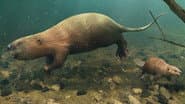
It’s important to us that you understand how big this beaver was. Just like modern beavers, it was semiaquatic -- it lived both on the land and in the water. The difference is that today’s beavers do a pretty special thing - one that the giant beaver probably didn’t, or couldn’t, do.

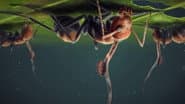
This ancient species had the same six legs and segmented body that we’d recognize from an ant today. But it also had a huge, scythe-like jaw and a horn coming out of its head. This bizarre predator belonged to a group known as “hell ants.” But they’re gone now, and we’re still trying to figure out why.
Our DNA holds evidence of a huge, ancient pandemic, one that touched many different species, spanned the globe, and lasted for more than 15 million years.
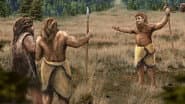
The evolution of our ability to speak is its own epic saga and it’s worth pausing to appreciate that. It’s taken several million years to get to this moment where we can tell you about how it took several million years for us to get here.
The biggest turtle ever described wasn’t an ancestor of today’s leatherback turtles or any other living sea turtles. But it looks like there are some things about being a giant, skin-shelled sea turtle that just work, no matter where, or when, you lived.
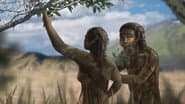
Our DNA holds thousands of dead genes and we’ve only just begun to unravel their stories. But one thing is already clear: we’re not just defined by the genes that we’ve gained over the course of our evolution, but also by the genes that we’ve lost along the way.
It's possible Euchambersia possessed venom about 20 million years before the first lizards and over 150 million years before the first snakes evolved. We’ve teamed up Sarah Suta from Bizarre Beasts to explore the story of venomous mammals, both living and extinct.
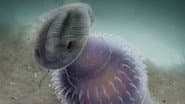
Elongated tubes, flat ribbons, and other “worm-like” body plans were so varied and abundant that a part of the Ediacaran is sometimes known as Wormworld. But in the end, the ancient Wormworld was ended by the actions of its very own worms.
No other placental mammal that we know of prefers one side of the body so consistently, not even our closest primate relatives. But being right-handed may have deep evolutionary roots in our lineage. And yet, being a leftie does seem to come with some unexpected advantages.
Today, chilis are the most widely cultivated spice crop in the world - grown everywhere from their native home in the Americas to Europe, Africa, and Asia. But how and why did chilis evolve this weird, fiery trick in the first place? And why did we learn to love that spicy burn?
Nunalleq, a village in what’s today southwest Alaska, seemed to have thrived during the Little Ice Age. How did this village manage to survive and prosper during this time period? And what caused this period of climate change in the first place?
While dinosaurs were dominating the land, the metriorhynchids were thriving in the seas. But taking that plunge wasn’t easy because it takes a very special set of traits to fully dedicate yourself to life at sea.
420 million years ago, the forest floor of what's now New York was covered with a plant that didn’t look like a tree at all, except its roots were made of wood. Instead of looking up to learn about the evolution of trees, it turns out paleobotanists should’ve been looking down all along.
Weasels have an extreme body plan that may push the boundaries of what’s metabolically possible. So when and how did this happen? Why'd the weasels get so skinny?
It might surprise you but cephalopods have a pretty good fossil record, with one major exception. If squids were swimming around in the same oceans as their closest cousins, where did all the squids go?
At Tanque Loma, at least 22 giant ground sloths in the genus Eremotherium met their end. Of the five hypotheses that researchers proposed for what killed the sloths, the best supported one right now is that they died surrounded by their own poop.
Lots of the traits we think of as defining us as mammals show up pretty early, during the time of the dinosaurs. And, in some cases, they show up a lot earlier and in things that weren’t mammals at all.
The Wrangel Island mammoths would end up being the final survivors of a once-widespread genus. In their final years, after having thrived in many parts of the world for millions of years, the very last mammoths that ever lived experienced what’s known as a mutational meltdown.
The remains of medium-sized predatory dinosaurs are pretty rare in places where giant predators like T. rex existed. Which is weird, because that’s just not how ecosystems work today.
The story of how the starfish got its arms reminds us that even animals that might be familiar to us today can have incredibly deep histories - ones that stretch back almost half a billion years.
Toxodon was one of the last members of a lineage that vanished 11,000 years ago after thriving in isolation for millions of years. And its fossils would inspire a revolutionary thinker to tackle a bigger mystery than Toxodon itself: evolution.
The world of the Jurassic was a lot like ours - similar interactions between plants and insects were happening, but the players have changed over time. Because it looks like pollination by insects actually got going twice.
The Toba supervolcano was the biggest explosive eruption of the last 2.5 million years. And humans were around to see it, or at least feel its effects! But what were those effects?
The Amazon rainforest of South America is a paradise for flowering plants. But long ago, the landscape that we now think of as the Amazon looked very different. And would you believe that the entire revolution of the Amazon began with just one day?
For decades, scientists believed dinosaurs were diurnal and tiny mammals were nocturnal. But as researchers have uncovered more mammalian fossils and studied the biology of different dinosaur species, they’ve found some surprising results.
It looks like the evolution of ocean-going whales like Borealodon may have affected communities found in the deep ocean, like the ones found around geothermal vents. And it turns out that when a whale dies, that’s just the beginning of the story.
Dinosaur mating behavior has been the subject of a lot of speculation, but what can we actually say about it from the fossil record?
Plants first made their way onto land at least 470 million years ago but for their first 80 million years, leaves as we know them today didn’t exist. What held them back?
These relatives of ours lived in Eurasia for more than 300,000 years. They were expert toolmakers, using materials like stone, wood, and animal bone. They were also skilled hunters and foragers, and may even have created cave art. So what caused the decline and disappearance of their population? Well, in a way...it could’ve been us. But maybe not in the way you might’ve heard.
The hardened residue scraped off your teeth at the dentist is called your dental calculus, and your dental calculus is the only part of your body that actually fossilizes while you’re alive! And scientists have figured out how to study & trace the evolutionary history of these microbes over tens of millions of years.
If you know one thing about pterosaurs, it’s that they’re flyers. And while pterosaurs may be well-known for their domination of the skies in the Mesozoic Era, they didn’t live their entire lives in the air. So how did we figure this out? And what were they like when they finally came down?
Around 10,000 years ago, somewhere in Africa, a microscopic parasite made a huge leap. With a little help from a mosquito, it left its animal host - probably a gorilla - and found its way to a new host: us.
The Snake Detection Hypothesis proposes that the ability to quickly spot and avoid snakes is deeply embedded in primates, including us - an evolutionary consequence of the danger snakes have posed to us over millions of years.
We often think of dinosaurs as either preying on other dinos or mammals, or as plant-eaters -- but in ecosystems today, those aren’t the only two options. So why would we expect dinosaurs to have only been carnivores or herbivores, with the occasional omnivore thrown in the mix?
As revolutionary as teeth were, they would go on to disappear in some groups of vertebrates. But why?
Do our modern horses descend from just one domesticated population, or did it happen many times, in many places? Answering these questions has been tricky, as we’ve needed to bring together evidence from art, archaeology, and ancient DNA…Because, as it turns out, the history of humans and horses has been a pretty wild ride.
Today, all mammals from humans to bats have five fingers or fewer. Yes, even whales, whose finger bones are hidden in their fins. Birds have four or fewer and amphibians get the best of both worlds, often having four digits on their “hands” and five on their “feet.” But no species of vertebrates have more than five digits, let alone eight!
There used to be SO MANY sharks...where did they go?
Dire wolves aren’t actually wolves but what they are might be even cooler.
Could humans survive during the Precambrian?
Don’t be fooled by convergent evolution.
Why do human knees suck?
And it’s been reported that one of the geologists started it on purpose?
The ecological niche of apex predators was empty on Hateg Island, waiting to be occupied by something large, mobile, and powerful enough to fill it.
Would you have survived the K-Pg Impact?
A truly enormous ichthyosaur around the size of a modern sperm whale, reached its size within just a few million years of taking to the water - a blink of an eye in evolutionary time.
Thylacines are definitely extinct!
Hyenas weren’t always able to eat bones. In fact, only a few million years ago, they lived very different lives.
The bird that evolved twice!
I will pass on the parasitic mind-controlling mushroom, thanks
We tend to think that evolution only goes in one direction— toward getting bigger and more advanced. But that’s not always the case. This tiny, simple animal, the Myxozoans, (yes, animal!) evolved from something bigger and more complex.
While sour taste's original purpose was to warn vertebrates of danger, in a few animal groups, including us, its role has reversed. The taste of danger became something it was dangerous for us to avoid.
Only a handful of Denisovan fossils have been identified. In the absence of actual body fossils, it’s impossible for us to reconstruct their morphology, right?
While we’ve been farming for around 10,000 to 12,000 years, the ancestors of ants have been doing it for around 60 million years. So when, and how, and why did ants start … farming?
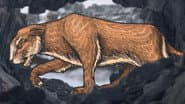
A mysterious, large feline roamed Eurasia during the last ice age. Its fossils have been found across the continent, and it’s been the subject of ancient artwork. So what exactly were these big cats?
Fossil evidence suggests Diictodon used burrows to breed, and that a parent stayed behind to feed and protect their young. And the parent that stayed behind? It might’ve been the male.
There’s something weird going on at the Cleveland-Lloyd Dinosaur Quarry in what’s now Utah.
Does Homo erectus beat out Homo sapiens?
Sometimes modern problems require ancient, evolutionary solutions.
What was this ancient pup’s last meal?
The newest oldest saber-toothed mammal
In the quest to understand how evolution basically built the woolly mammoth, we may have found the blueprints for building them ourselves.
Paleodictyon, a hexagonal-patterned fossil, is a bit of a mystery. We don’t even know if it’s a trace fossil, or the organism itself. So… what could it be?
In 2003, microbiologists made a huge discovery. One that would force us to reconsider a lot of what we thought we knew about the evolution of microbial life: giant viruses.
Microbiology goes macro with a new giant bacterium!
Spinosaurus had dense bones!
Guemesia: a new no-arm dino
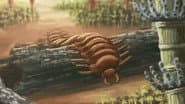
This giant millipede was the largest known invertebrate to ever live on land. So how did it get so big??
Despite the profound changes we’ve made here in recent history, the epic saga of Los Angeles' natural history is still visible - and even striking - if you know where and how to look for it.

Today, billions of people around the world start their day with caffeine. But how and why did the ability to produce this molecule independently evolve in multiple, distantly-related lineages of flowering plants, again and again?
One of the biggest earthquakes humans ever experienced happened around 3800 years ago in what's now northern Chile.
We have no idea where they were all this time, or who stole and returned them and why.
Flesh-eating bees exist!
Archaeologists have discovered an ancient art workshop
There is one - and only one - group of mammals that doesn’t have alpha-gal: the catarrhine primates, which are the monkeys of Africa and Asia, the apes, and us.
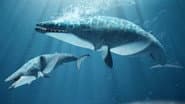
Mystacodon is the earliest known mysticete, the group that, today, we call the baleen whales. But if this was a baleen whale, where was its baleen? Where did baleen come from? And how did it live without it?
This fungus was actually manipulating ants’ movements, forcing them to do something they’d never ordinarily do, something strange, yet specific…
Did you know that fossils can get sick? – Specifically with Pyrite Disease
Disaster in the great plains!
80 years ago, a bunch of fossils of ancient humans disappeared.
Congrats! You just found a wombat burrow. And the cubes are its poop.
Wisdom teeth can be such a pain
Paranthropus got chomped by a leopard
We didn’t always wear clothes!
Ancient sperm whale heads belonged on every shark-cuterie board
Mercury, Venus, and Mars are all super low on water – so where did ours come from and why do we have so much of it? We think our water came from a few unlikely sources: meteorites, space dust, and even the sun.
Around the time that some of our fishapod relatives were crawling out of the water, others were turning around and diving right back in.
We might’ve been wrong about how this saber-toothed cat looked
Sometimes evolution is completely predictable.
Shanidar 1 got by with a little help from his friends
Here are two ways to get a fossil species named after you.
This website uses TMDB and the TMDB APIs but is not endorsed, certified, or otherwise approved by TMDB.