Оригінальна назва
Het verhaal van Nederland
Випущено
02.02.2022
Країна
NL
Жанр
Документальний
Виробничі компанії
Pupkin, Tuvalu Media
Статус
Завершено
Кількість сезонів
4
Кількість епізодів
30
The Story of the Netherlands tells the story of the country we live in, from the moment the first inhabitants settled there. Never before has our history, and how it has made us who we are today, been made tangible in this way. The project consists of a 10-part television series for NPO 1, with Daan Schuurmans as narrator.











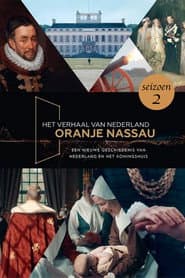
A journey through history that shows who the Oranges are and how today's royal family came into being.

Daan Schuurmans talks about the origins of the Orange dynasty. With the marriage of Count Engelbrecht of Nassau to the Dutch Johanna van Polanen, the German Nassau family set foot on Dutch soil for the first time. More than a century later, descendant Willem received the title Prince of Orange thanks to an inheritance. This William of Orange-Nassau wants to strengthen his position by marrying the Protestant Anne of Saxony. But that gets him into big trouble with his ruler, the Spanish king Philip the Second.

After the murder of William of Orange, the role of the Nassaus in the Netherlands seems to have ended. His inheritance sows division within the family and a battle erupts over who can call himself the rightful successor of the Father of the Fatherland: eldest son Philip Willem or the younger Maurits?

In the 17th century, the Oranges were at the height of their power and prestige. One woman plays an important role in this: Amalia van Solms. This Orange Lady is committed to the survival of the dynasty and the image of the family.

In Friesland, the Nassau-Dietz family continued the Orange Line after the death of King-Stadholder William the Third. From Leeuwarden they try to match the name and fame of their Orange predecessors and obtain the governorship over the whole of the Netherlands.

Due to revolution and wars at the beginning of the 19th century, the Oranges fled and lost everything: the governorship, their possessions and even the Netherlands. But not their English and German family ties. The Orange seem to have been forgotten in the Netherlands for a long time when, thanks to their international contacts, they returned to the highest position ever in the Netherlands in 1813. With King William I on the throne.

The power of the Orange Kings slowly but surely crumbles in the nineteenth century. A new constitution gives parliament more power at the expense of the king. Much to the frustration of King Willem III, who is doing everything he can to turn the tide. Because what is a king without power?

The Oranje-Nassau family consists of only two members: Queen Wilhelmina and Princess Juliana. If Juliana does not provide offspring, the dynasty will cease to exist. The relief is great when a marriage partner is found in the person of Bernhard zur Lippe Biesterfeld. Can this German prince save the House of Orange?

The Oranje-Nassau family has become an indispensable part of the Netherlands. For centuries they have played a significant role in our history, right at the center of power, in good times and in bad. Will the Oranjes continue to color our history in the future?



In the 1930s, a global economic crisis raged, leaving deep scars on societies around the world. Growing discontent among the population provided fertile ground for new radical movements, including fascism, which was on the rise. This ideology gained increasing support not only in Germany, where it exerted its greatest influence, but also in the Netherlands, leading to growing polarization within society. In these turbulent times, boxing friends Ben Bril and Sam Olij, once united by their shared passion for the sport, found themselves diametrically opposed, separated by their political convictions and the forces dividing the era.

Under the leadership of Adolf Hitler, the German Reich is expanding at an alarming pace. Country after country falls victim to his ruthless expansionist drive. On May 10, 1940, the attack on the Netherlands follows, in which the Dutch armed forces are confronted with overwhelming German superiority. During these crucial days, responsibility rests on the shoulders of Commander-in-Chief Winkelman, who must maintain his composure amidst chaos and threat to lead the country through one of the most defining moments in its history.

During the occupation of the Netherlands by Nazi Germany, the Nazis regarded the Dutch as a brother nation and emphasized that they would treat them with respect, provided the population adapted to their wishes. However, this attitude was accompanied by drastic measures, such as the billeting of German soldiers in families' homes. This led to tensions and discomfort in many Dutch living rooms, where daily life was disrupted by the presence of soldiers and the pressure to conform to the occupier.

The Nazis label Jews as so-called ‘Untermenschen’. Through systematic exclusion, mandatory registration, and strict isolation, everything is taken from them: work, property, and freedom of movement. Using sophisticated tactics, the occupier attempts to split Dutch society and sow distrust between population groups. All these measures serve one horrific purpose: the total destruction of the Jewish community.

While most Dutch people obey the occupier, there are also those who offer resistance. At universities, through illegal newspapers, and by helping those in hiding. Resistance groups emerge throughout the Netherlands. The occupier responds to every form of opposition with harsh reprisals. Time and again, the question arises as to what extent resistance fighters are willing to continue.

With the advance of the Allies, the liberation of the Netherlands seems close, but it does not come without a price. Hundreds of Dutch people die in Allied bombardments, and in large parts of the country, a bitterly cold winter sets in with a harrowing shortage of food and fuel. The grueling final act of the occupation. When liberation finally arrives, not only joy prevails; it is also the beginning of the reckoning.

With the fall of Nazi Germany, the war is over. At least, that is the hope of the Europeans. But soon, it is precisely the Netherlands that is put to the test and will itself act as an aggressor. In August 1945, Indonesia, a Dutch colony, declares its independence. What follows is a bloody colonial war.

Цей веб-сайт використовує TMDB та API TMDB, але не схвалений, не сертифікований чи іншим чином затверджений TMDB.